


Vitamin D3, often called the sunshine vitamin, plays a big role in everything from bone health to immune support. And for women, whose needs shift with age, pregnancy, and hormonal changes, getting the right daily dose is crucial.
In this post, we explain just how much vitamin D3 you need to take daily and how to avoid going overboard into toxicity. Let’s get right into it!
How Much Vitamin D3 Do You Need To Take Per Day?
If you're looking for the recommended amount of vitamin D3 to take per day, the numbers are fairly clear, at least on paper.
Here’s a simple breakdown using both international units (IU) and micrograms (mcg), the two most common ways you’ll see vitamin D labelled:
| Group | Reference Nutrient Intake (RNI) | Upper Limit (UL) |
|---|---|---|
| Adults (including pregnant and breastfeeding women) | 10 µg/day (400 IU) | 100 µg/day (4,000 IU) |
Note: The word microgram (mcg) is sometimes written with the Greek symbol μ followed by the letter g (μg). Also, sometimes the amount of vitamin D is expressed as International Units (IU). 1 microgram of vitamin D is equal to 40 IU. So 10 micrograms of vitamin D are equal to 400 IU.
These dosages are based on the Reference Nutrient Intake (RNI) set by the UK’s Scientific Advisory Committee on Nutrition (SACN). Their landmark guidance recommends 10 micrograms of vitamin D daily for all adults, and a limit of 100 micrograms (4000 IU). More than this could be harmful.
SACN calculated and found that this amount is what is necessary to ensure that 97.5% of the UK population has a blood vitamin D level above the "danger zone." That is, enough to maintain a minimum blood level of 25 nmol/L, which SACN considers paramount for preventing vitamin D deficiency.

What Is Vitamin D Deficiency in Women? Signs, Risks, and Why It’s So Common
In the UK, vitamin D deficiency is officially defined by the SACN as having a blood level below 25 nmol/L. This is the critical threshold to prevent bone diseases like osteomalacia.
However, there's also a middle ground known as vitamin D insufficiency, which many UK specialists, including the Royal Osteoporosis Society, classify as 25–50 nmol/L.
Within this range, your levels aren't at the highest risk for severe disease, but they're still considered less than optimal for long-term bone and muscle health. Ideally, the National Health Service (NHS) and SACN recommend aiming for a level above 50 nmol/L.
| Vitamin D Status | Blood Level (nmol/L) | NHS Guidance |
|---|---|---|
| Deficient | < 25 nmol/L | The official NHS threshold for clinical deficiency |
| Insufficient | 25 – 50 nmol/L | Below optimal; "sub-optimal" for bone health |
| Sufficient | 50 – 125 nmol/L | Considered adequate for most of the UK population |
| High / Risk Zone | > 150 nmol/L | Potential for "hypercalcaemia" (too much calcium) |
The common signs of low vitamin D in women include:
- Fatigue that doesn’t go away with rest
- Muscle weakness or general aches
- Bone pain or feeling “creaky” in the joints
- Low mood, especially during winter
So why is vitamin D deficiency so common?
Here in the UK, we’re at a high latitude. This means the sun’s UVB rays that trigger vitamin D production in the skin are too weak for much of the year. Add to that:
- Working most days indoors
- Wearing SPF, which blocks UVB
- Having darker skin, which reduces vitamin D synthesis
- Being older (production slows with age)
- Pregnancy and breastfeeding, which increase demand
- Taking certain medications or having fat absorption issues
- Having gut conditions like inflammatory bowel disease or a history of gastric bypass surgery
This is why it’s no surprise that low vitamin D is a national issue, especially for women juggling hormonal shifts, pregnancy, or responsibilities that keep them indoors.
Should I Take Daily Vitamin D Supplements?
If you live in the UK, the answer is almost always yes, especially between October and March. According to the NHS and SACN, everyone over 4 years should consider taking a daily 10 mcg (400 IU) vitamin D supplement during autumn and winter. Children aged 1-4 are also advised to take vitamin D daily, not just during winter.
In case you're already low in vitamin D, your GP might recommend higher doses to restore your levels.

Vitamin D Supplements
⭐⭐⭐⭐⭐ Based on 1000+ reviews
Shop NowChoosing the Best Vitamin D Supplements
It's easy to get overwhelmed by the hundreds of options in the market. To ensure you aren't wasting your money, you should look for specific quality "markers" that guarantee quality, safety, and efficacy. Before buying, check the label for these features:
-
Vitamin D3 (Cholecalciferol): Always look for D3. It's the same form your body produces from sunlight and is significantly more effective at raising and maintaining blood levels than the plant-based D2.
-
Presence of Vitamin K2 (MK-7): This is the "secret weapon" for quality. While Vitamin D helps you absorb calcium, Vitamin K2 acts as a traffic warden, ensuring that calcium goes into your bones and teeth rather than building up in your arteries or kidneys. Look for the MK-7 form of K2, as it stays in your body longer.
-
Clean Label & Fillers: High-quality supplements avoid unnecessary fillers and additives. Also, check that the product is non-GMO and free of artificial colours, common allergens (gluten or dairy), and excessive synthetic binders.
-
Manufacturing Standards: Ensure the supplement is "Made in the UK" under Good Manufacturing Practice (GMP) standards. This guarantees you that what is written on the label is exactly what is inside the pill.
At Nutrition Geeks, we formulate our Vitamin D supplements using evidence-backed ingredients and careful consideration of all the above factors. PhD-level scientists make all our supplements in the UK in GMP-certified facilities. Our supplements are third-party lab tested for purity and potency. We don't add dairy, gluten, or synthetic fillers. Choose one that fits your lifestyle:
-
Vitamin D 1000 IU Optimum Strength: Vegetarian and gluten-free, we use D3 to support immunity, bone health, and improve mood.
-
Award-Winning: Voted "Best Overall Vitamin D" by The Independent for 2022, 2023, and 2024.
-
Reliable Maintenance: 1000 IU (25 mcg) is 2.5x the NHS minimum, ensuring you stay well above the deficiency threshold without reaching the upper limit.
-
Tiny Tablets: Specifically designed to be exceptionally small and easy to swallow.
-
Dosage: 1 tablet daily with water.
- Supply: 365 tablets (12 months).
-
Award-Winning: Voted "Best Overall Vitamin D" by The Independent for 2022, 2023, and 2024.
-
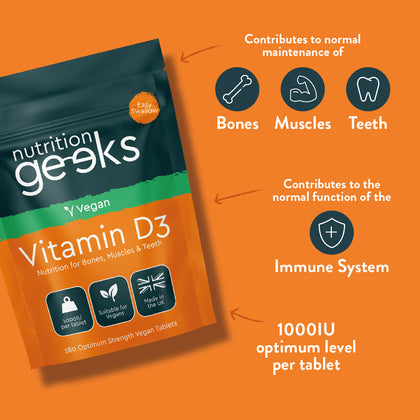
Vegan Vitamin D 1000 IU Optimum Strength: Best for people following a strict plant-based diet who want an optimum strength dose.
-
Lichen-Sourced: Unlike most D3 (which comes from sheep's wool), we use Vita-algae D® sourced from lichen, making it 100% vegan.
-
Immune & Bone Support: Provides a high-strength dose to support daily wellness and skeletal integrity.
-
Dosage: 1 tablet daily with water.
- Supply: 180 tablets (6 months).
-
Lichen-Sourced: Unlike most D3 (which comes from sheep's wool), we use Vita-algae D® sourced from lichen, making it 100% vegan.
-
Vitamin D 4000 IU Max Strength: Ideal for those correcting a known insufficiency.
-
High Potency: At 4000 IU (100 mcg), this reaches the NHS Safe Upper Limit, providing 2000% of the daily NRV.
-
Muscle & Teeth Health: Beyond bones, this higher dose also supports healthy muscle function and tooth mineralisation.
-
Sunlight in a Bottle: Designed to mimic the effects of peak summer sunlight.
-
Dosage: 1 tablet daily.
- Supply: 365 tablets (12 months).
-
High Potency: At 4000 IU (100 mcg), this reaches the NHS Safe Upper Limit, providing 2000% of the daily NRV.
-
Vitamin D3 4000 IU & K2: Combines 4000 IU of D3 with 100 mcg of K2 for superior bone and calcium balance. Plus, it comes in easy-to-swallow micro tablets.
-
The Synergistic Duo: While D3 absorbs calcium, K2 ensures that calcium is directed to your bones and teeth rather than your arteries.
-
Cardiovascular Safety: Helps prevent "calcification" (calcium buildup) in blood vessels.
-
Micro-Tablet Magic: Uses 6mm micro-tablets, making this high-strength combo incredibly easy to take.
-
Dosage: 1 tablet daily with water.
- Supply: 365 tablets (12 months).
-
The Synergistic Duo: While D3 absorbs calcium, K2 ensures that calcium is directed to your bones and teeth rather than your arteries.
Our geeky formulas enhance absorption, are NHS-aligned, and cost as little as 1–5 p per day. Explore our collection of vitamin D supplements today to support your bone health, immune function, and overall well-being.
Can I Get Enough Vitamin D From Sunlight?
Let's start by noting that you won't get enough vitamin D in the autumn and winter months because of limited sun exposure.
However, we call it the sunshine vitamin for a reason. Your skin makes vitamin D when exposed to UVB rays from the sun. But before you dash outside in your shorts, there are a few things to know.
How Much Sun Do You Need to Produce Vitamin D?
In the UK, from April to September, the following daily exposures at midday (11 am – 3 pm) with forearms and face uncovered are generally sufficient to maintain healthy vitamin D levels:
| Skin Tone | Exposure Time (Daily) | Why? |
|---|---|---|
| Lighter Skin Types | 10 – 15 minutes | Lighter skin has less melanin, allowing UVB rays to penetrate and trigger Vitamin D synthesis faster. |
| Darker Skin Types | 25 – 40 minutes | Higher melanin levels act as a natural filter, requiring more sun exposure to produce the same amount of Vitamin D. |
The "Shadow Rule": A Quick Field Test
If you aren't sure if the sun is strong enough, experts at the Royal Osteoporosis Society recommend the Shadow Test:
-
Short Shadow: If your shadow is shorter than you, the sun is high enough in the sky for your skin to produce Vitamin D
- Long Shadow: If your shadow is longer than you (which happens all winter and in the early morning/late evening), your skin is producing little to no Vitamin D, regardless of how sunny it looks.
Note These Critical Factors:
-
The "Winter Gap": From October to early March, the sun in the UK is at such a low angle that the atmosphere filters out almost all UVB rays. During these months, you could stand outside all day and still produce zero Vitamin D.
-
Glass Blocks UVB: You cannot produce Vitamin D by sitting in a sunny conservatory or driving. Glass blocks the UVB rays needed for synthesis, even though you can still feel the "heat" (UVA rays).
-
The "Lynchpin" of Sunscreen: Sunscreen (SPF 15+) can reduce Vitamin D production by 95-98%. The SACN suggests getting your "10-15 minutes" of sun first, then applying sunscreen with a high sun protection factor (SPF) if you plan to stay out longer. Note that extensive sun exposure can cause skin cancer.
This is why many experts, including the NHS, recommend taking a vitamin D dietary supplement during winter, and often year-round. Relying solely on sun exposure is risky, as you may not always produce the optimal amount of vitamin D that you need to avoid insufficiency.

What Foods Give You Vitamin D?
Diet alone cannot give you all the vitamin D you need. This is because very few foods naturally contain vitamin D, and that’s why deficiency is so common, especially in places where sunshine is scarce.
That said, you can boost your intake a bit with the right foods. Here’s a quick breakdown of the best sources of vitamin D:
Food Vitamin D Content (Approximate Per Serving)
These are the reliable sources according to the NHS and the British Dietetic Association (BDA):
| Food Source | Vitamin D (Approx. per 100g/serving) | Status |
|---|---|---|
| Oily Fish (Salmon, Mackerel, Herring) | 400–600 IU (10–15 mcg) | The best natural source |
| Canned Sardines | 140–200 IU (3.5–5 mcg) | Excellent "pantry" source |
| Egg Yolks | 40–70 IU (1–1.7 mcg) | Helps, but you’d need ~10 eggs to hit the RNI |
| Red Meat / Liver | ~40 IU (1 mcg) | Small amounts; liver is high but limited in pregnancy |
| Fortified Cereals | 40–80 IU (1–2 mcg) | Look for "Vitamin D" on the breakfast cereal box |
| Plant-Based Milks | 30–45 IU (0.75–1.1 mcg) | Most (Alpro, Oatly) are fortified, but check the label |
| Fat Spreads | Varies | Most UK margarines/spreads are voluntarily fortified |
It’s clear from the table that vitamin D is found in small quantities in foods. Even a balanced diet with a vitamin-rich piece of fatty fish only gives you nearly the RNI for one day. Most other foods barely scratch the surface.
That’s why relying on dietary vitamin D alone rarely works.
And for vegans or those on restricted diets, fortified foods like oat milk, almond milk, soy milk, cereals, and orange juice become even more important, though even those might not give you enough vitamin D consistently.
Bottom Line: Food helps, but supplements are often necessary, especially during winter or if you’re already low.

Benefits of Vitamin D3 for Women
-
Supports Bone Health at Every Life Stage: Vitamin D3 helps your body absorb calcium, which is essential for maintaining healthy bones, especially during menopause when bone loss accelerates.
-
Maintains Muscle Strength and Balance: Adequate vitamin D levels support muscle function. It's particularly important for older women looking to stay steady, mobile, and independent.
-
Supports Immune Health: Vitamin D plays a role in normal immune system function. Note that women with low vitamin D may be more prone to seasonal infections.
-
Helps Keep Teeth Strong: By supporting calcium absorption, vitamin D helps maintain healthy teeth.
In short, a simple daily supplement containing vitamin D may help support strong bones and teeth, improve calcium absorption, maintain muscle function, and support a healthy immune response.
Safety: What Happens If I Take Too Much Vitamin D3?
Yes, you can take too much vitamin D, but don’t panic! Vitamin D toxicity is rare and is usually caused by high-dose supplements taken over long periods without medical supervision.
The upper limit for most healthy adults is 100 mcg (4,000 IU) per day, but doses this high are reserved for short-term correction of deficiency, not daily maintenance.
GPs sometimes prescribe loading doses of up to 50,000 IU weekly, but always under medical supervision. Regular use of high-dose dietary supplements without testing can increase the risk of high calcium levels and kidney issues, especially if taken long-term.
Symptoms of too much vitamin D include:
- Nausea or vomiting
- Weakness or confusion
- High calcium levels
Who needs to be extra cautious?
- Those with medical conditions linked to hyperparathyroidism
- People with granulomatous diseases (like sarcoidosis)
- Anyone on medications that affect vitamin D metabolism
- And, of course, if you’re pregnant, speak to your GP first

Frequently Asked Questions About Vitamin D3
Can I Take 4,000 IU of Vitamin D3 Daily?
Yes. 4,000 IU is the upper safe limit for most healthy adult women. People may take the upper dosage limit in the short term under supervision if they have low vitamin D levels.
What Vitamin D Level (nmol/L) is Considered Sufficient in the Blood?
In the UK, blood levels are measured in nmol/L, nanomoles per litre:
-
Deficient: Below 25 nmol/L
-
Insufficient: 25–50 nmol/L
-
Sufficient: Above 50 nmol/L
Should Women take Vitamin D with Calcium Supplements for Bone Health?
Yes. Vitamin D helps absorb calcium, so taking them together can support bone health and keep muscles healthy, especially post-menopause. Pregnant women should consult with their GP first.
Does Sun Exposure Provide Enough Vitamin D if I Use SPF?
Probably not. Sunscreen blocks UVB, which your skin needs to produce vitamin D. While brief, unprotected exposure helps, it’s a balancing act given the risk of skin cancer.
What are the Best Adult Vitamin D Supplements for Women?
The best vitamin D supplements for women, including pregnant and breastfeeding mums, are D3 supplements (cholecalciferol), ideally from a trusted UK brand. Nutrition Geeks’ Vitamin D3 is high quality, easy to take, and designed to meet your daily needs.
Which Foods Have the Most Vitamin D?
Fatty fish, cod liver oil, egg yolks, beef liver, and fortified foods like soy milk, orange juice, and cereal contain the most vitamin D, but food alone usually isn’t enough.
How Long Does it Take to Raise Vitamin D Levels?
Most people see an improvement in their vitamin D levels within 8–12 weeks of daily supplementation. It depends on how low you started and how much you’re taking.
Conclusion
Getting your daily vitamin D doesn’t have to be complicated. As noted by the NHS and SACN,10 micrograms of vitamin D daily is ideal for healthy women. Those with deficiency or insufficiency may take up to 100 micrograms (4000 IU) per day. More than this could be harmful.
Pregnant and breastfeeding mums and women managing a health condition should consult with their GP first for targeted tailoring, to avoid any risks. Your health is personal, and your vitamin D plan should be too.
At Nutrition Geeks, we’re happy to help you look and feel healthier. Our geeky, science-backed vitamin D3 supplements are NHS-aligned and available in optimum and maximum potencies. We got you!
References
British Dietetic Association (BDA). (2024, November). Vitamin D. BDA.
National Health Service (NHS). (2023). Vitamin D: Vitamins and minerals. NHS.
Royal Osteoporosis Society (ROS). (2018). Vitamin D and bone health: A practical clinical guideline for patient management, the quick guide. National Osteoporosis Society.
Scientific Advisory Committee on Nutrition (SACN). (2023). Vitamin D and health report (2016, reaffirmed 2023). Public Health England.


Comments (0)
There are no comments for this article. Be the first one to leave a message!